
HoloDex
The only one of the category's three leaders to use its full ten screenshot slots — which is exactly how its two worst mistakes got seen.
HoloDex was the second listing Romain read closely while sharpening Logbook's own App Store screenshots in August 2026 — 20,850 US reviews at 4.82 stars, the segment's dark-navy-and-sunburst house style. It's the only one of the category's three biggest apps to actually use all ten screenshot slots the App Store gives it; Collectr uses six, OP.TCG five. That completeness is worth something. It's also how a set gets long enough to make the same mistake twice.
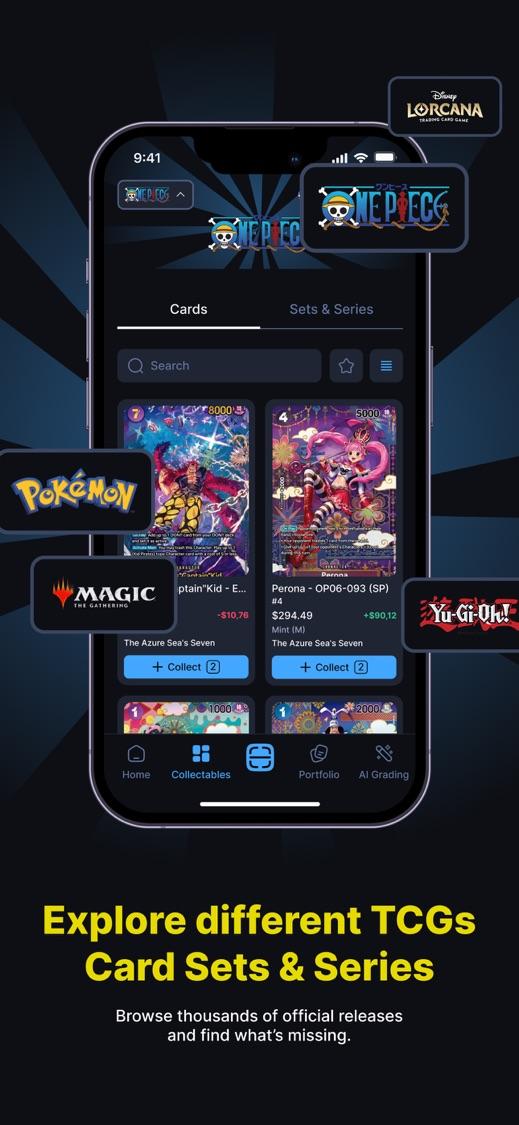
Four competitors' logos, for free, in your own first slot
The opening screenshot exists to say "we cover every trading card game, not just one" — a fair claim for an app that wants to out-reach a Pokémon-only or One Piece-only scanner. The way it's made that claim is to print Pokémon's, Magic's, Yu-Gi-Oh's and Disney Lorcana's own logos, legibly, in the hero slot of its own App Store page. It reads as endorsement at a glance; it's actually just inventory.
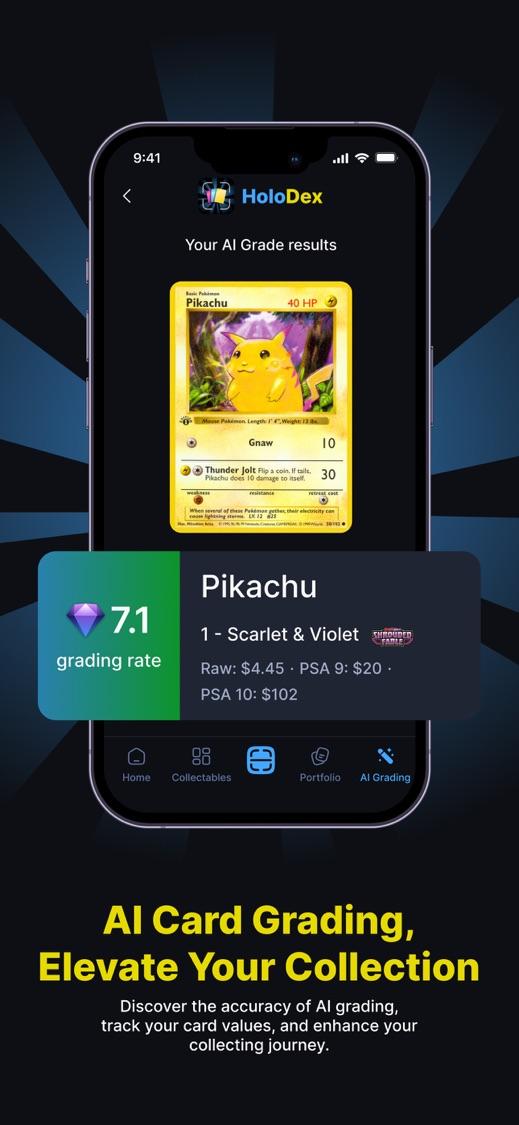
AI grading, the feature every competitor now has
A grading score, a raw price and two graded prices, read off one scanned card. It's a genuinely useful screen. It's also the exact feature Romain's research flags as no longer a differentiator in this category at all — every major competitor ships an AI-grading screenshot now, which means this slot tells a prospective user nothing about why HoloDex specifically, only that it hasn't fallen behind.
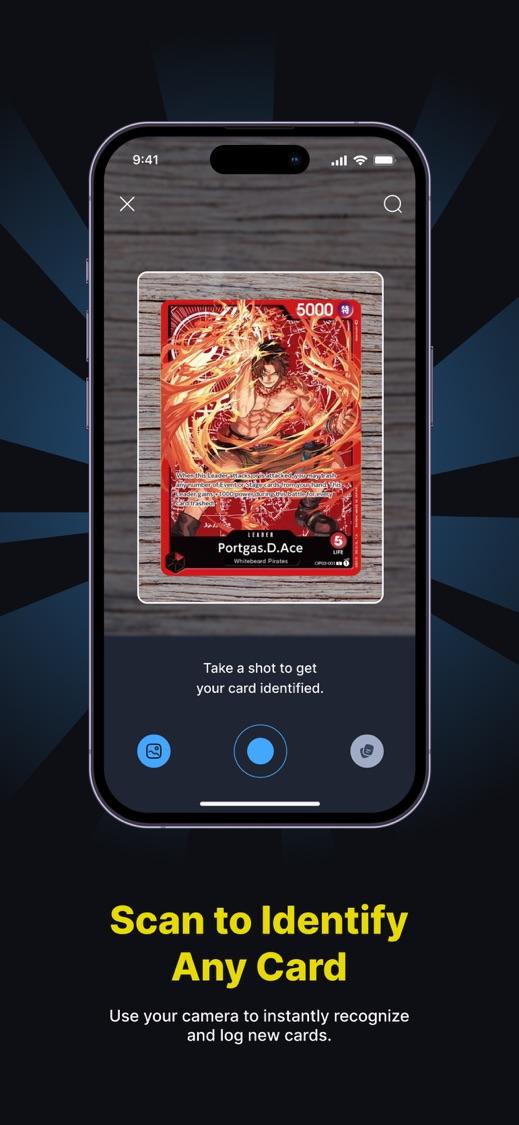
The baseline shot, done plainly
Every competitor in the category runs this same slot — viewfinder, card inside the frame, shutter button — because a first-time visitor needs to believe the scanner works before anything else matters. HoloDex's version is competent and unremarkable: a real wood-grain surface instead of a studio background, a single blue accent, nothing wrong with it and nothing that would make it the reason someone picks this app over the other two.
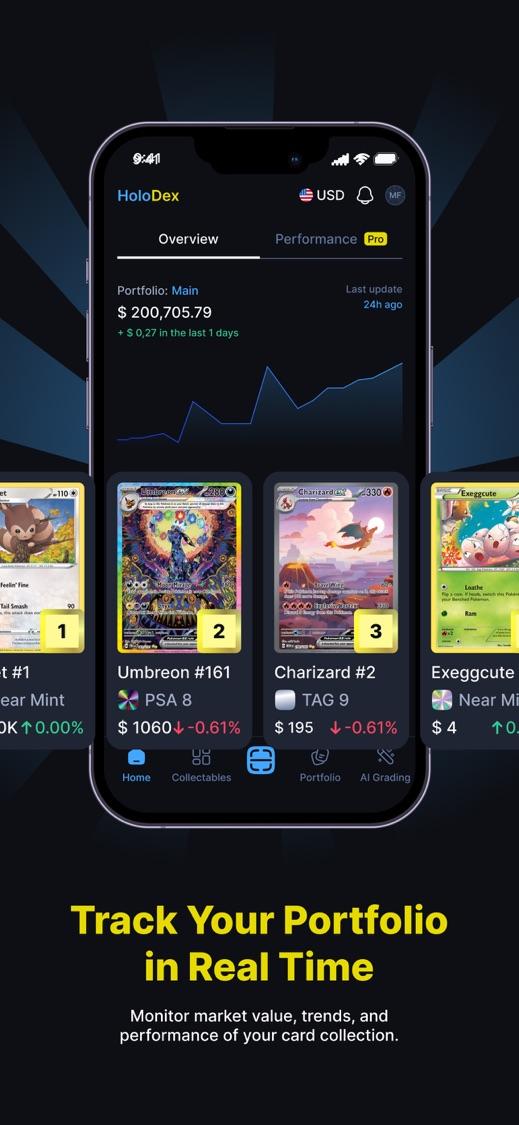
A $200,705 portfolio that moved 27 cents
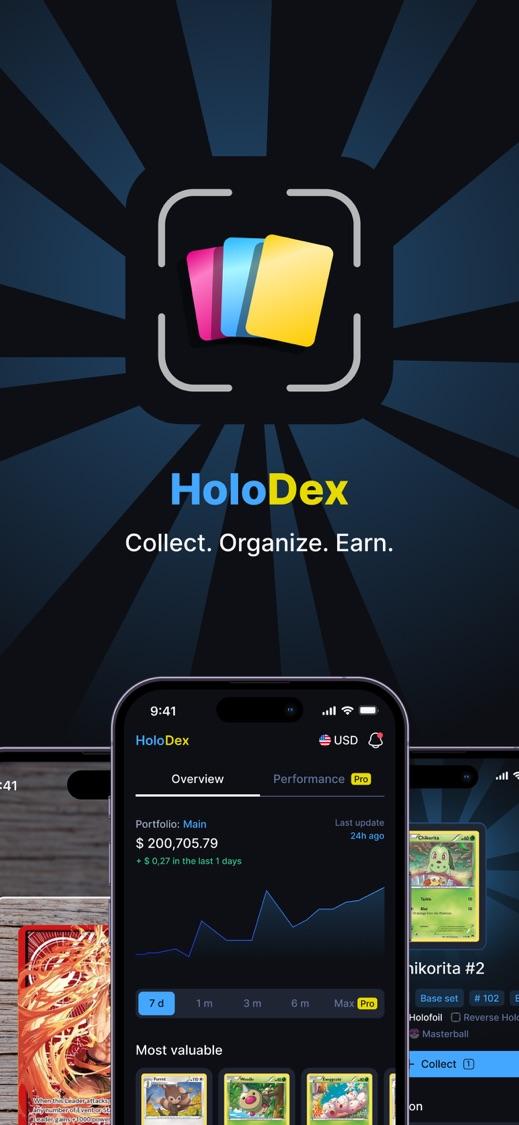
Romain's research calls this one out by exact figure: a $200,705.79 portfolio paired with a "+ $0.27 in the last 1 days" change line. The two numbers don't describe the same product — a collection worth that much should either be moving by hundreds of dollars a day or the figure itself is implausible — and a prospective buyer with real money to track sees the mismatch in under three seconds. It's the screenshot most likely to read as staged rather than real.
The currency problem, printed in its own disclaimer
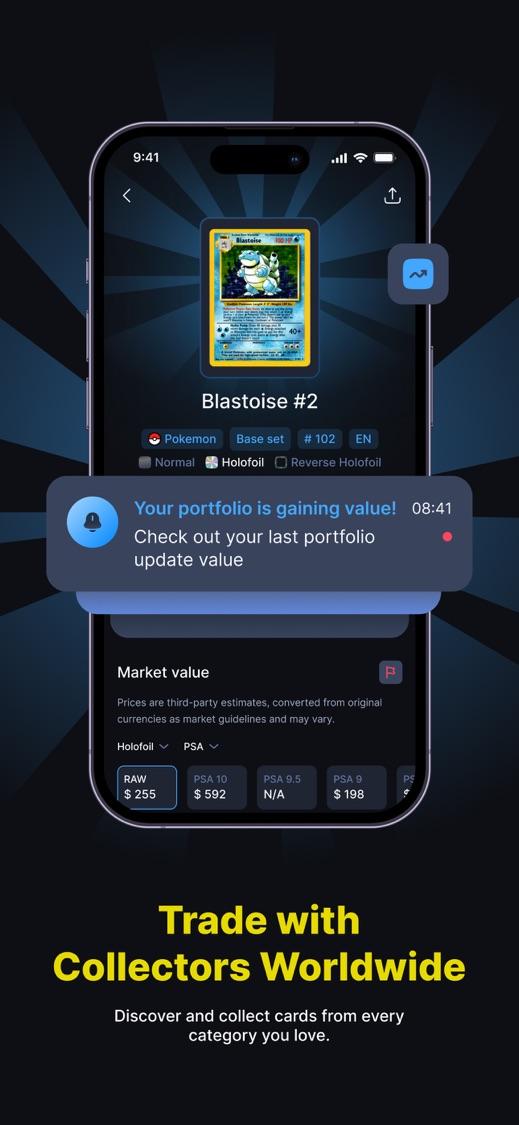
This is the same euro gap OP.TCG leaves open, but HoloDex's version says the quiet part out loud: its own market-value disclaimer admits prices are "converted from original currencies." Cardmarket, the reference price source in Europe, is never shown as a native currency anywhere in the set — not even here, where the app is explaining its own price math to the exact shopper who'd want to see it.
A fourth verb would be invisible here
"Collect. Organize. Earn." is one of four nearly identical three-verb subtitles Romain found across the category's top listings — Collectr runs "Collect. Track. Profit.", another competitor runs "Scan. Price. Grade. Collect." His note on the pattern: a fifth verb, in any of these, would be invisible. Three is already the ceiling a glanced-at subtitle can hold.